How can you identify a goalkeeper? There are many attributes that create a strong goalkeeper, but bravery stands out the most in younger players. Goalkeepers need to be brave in order to learn and develop new skills. As a goalkeeper, a player must leave their comfort zone and push their mind and body past preconceived limits. Being a goalkeeper goes against human nature.
It takes bravery to move into the path of a flying object, to jump off the ground and land on your side and to fly at another player’s running feet. Bravery is not only shown in a physical way. A player must be mentally brave to deal with how their mistakes can affect the game and their team. Or to allow their body to learn something new and uncomfortable. If a young player is naturally brave, then skill and technique can be taught.
Choosing a goalkeeper: look for bravery
When selecting a goalkeeper to play for your team, try to find out their mindset. Are they brave? Are they coachable? Will they push through mental and physical barriers? Encourage a player’s natural bravery by supporting it and accepting that mistakes will be made because of it. But once the young keeper learns to make the correct decisions, their bravery will be an asset.
How to build goalkeeper bravery safely
Bravery isn’t the same as being reckless. A young keeper who throws themselves at every ball without good technique will get hurt sooner or later, and one bad knock can undo a lot of confidence. Real courage in goal grows out of competence. When keepers know how to fall, how to protect themselves and what to do next, they’re far more willing to go for the ball.
That’s why we build brave actions in small steps:
- Start low. Learn to fall from the knees, then from a crouch, and only then from standing, always on grass or turf.
- Control the service. Begin with soft, predictable throws, then add pace and surprise as the technique holds up.
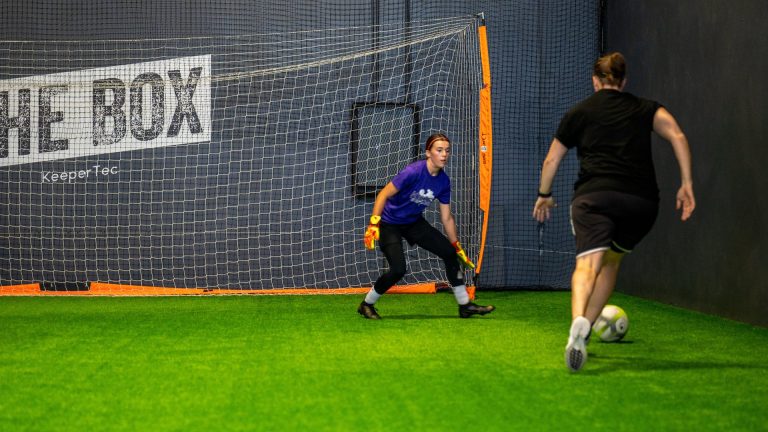
- Teach 1v1s in phases. Closing down, getting set and staying big come before going down at an attacker’s feet.
- Allow time to reset. A keeper facing shot after shot learns to protect themselves, not to be brave.
What goalkeeper bravery looks like at each age
For the youngest keepers, bravery means getting their body behind the ball, catching it at the belly and bouncing straight back up after a fall. Around 10, it might be a first low dive from a crouch, or going down to gather a ball along the ground. By 12 and 13, it’s calling early for a high ball, coming for crosses in a crowded box and closing down a 1v1 with good timing. Every child moves at their own pace, so let technique decide when to take the next step, not age. Our guide to goalkeeper drills by age breaks these stages down, with drills to try at each one.
How coaches and parents can support it
Mental bravery needs just as much care as physical bravery. Praise the decision to go for the ball, even when it goes wrong, and talk about what to do next time rather than the goal that went in. Never ask for a dive the keeper hasn’t been taught. And remember that when the whole team shares responsibility for goals, it’s much easier for any player to step into goal, as we explain in preparing players to play in goal.