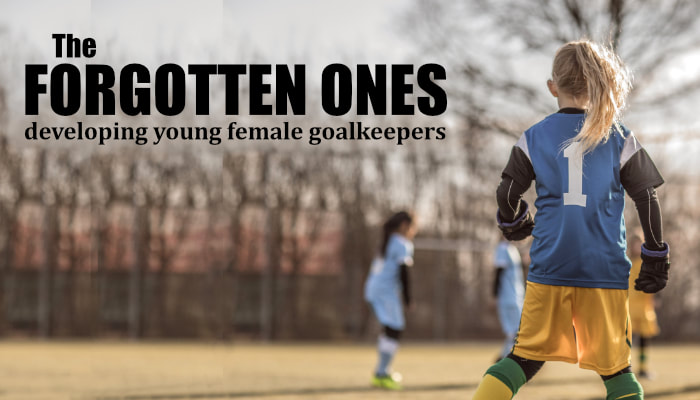
This editorial on developing female goalkeepers was written by Adrienne Cook and originally posted on tss.ca.
Over the past 10 years, TSS has been helping countless young female players get recruited to university level soccer. As you can imagine, this has produced many conversations with a variety of university coaches about their needs for the upcoming season. It’s been impossible not to recognize a common trend from those conversations: the need for a strong goalkeeper. Year after year, we hear this need echoed by coaches on the female side of the game. This demand is second only to that of strikers… but that’s a topic for another time.
Coaches at the top levels of the game understand the difference a strong and confident goalkeeper can make to their team. They know a goalkeeper can be the difference between a winning and a losing season. For teams that do enjoy the benefits of a strong goalkeeper, there is always a nagging worry. If she gets injured, things may go sideways fast given the lack of depth in the position.
The unfortunate reality is that there’s a low percentage of girls who choose to be a goalkeeper. And of those who choose the position, there’s an even lower percentage who receive the proper training at the right age. This problem starts at the grassroots level and ultimately manifests at the university level and beyond.
Why girls fear the position
Kids sign up to play soccer because they want to run around the field and kick a ball. This is the expectation of the parents as well. The concept of playing in goal isn’t even on the radar of possibilities. At best, playing in goal is a bothersome necessity – in the same way that playing a rousing game of tag requires that someone be “it.” At worst, it’s a dreaded sentence. This is where the goalkeeper deficit forms its roots.
If you’ve ever been around youth soccer games, at some point you will surely see a young girl in tears because it’s her turn to play in goal. The fear is real because it’s an unknown. The position is often viewed by girls as the “goat” position, the one who shoulders the blame for any and all goals conceded. Pressure from teammates, coaches and those watching can be too great for a young mind to process. More often than not, it shuts down in fear.
Starting too late
In North America, the common approach is to rotate players through the goalkeeper position until age 11 or 12 with little to no training. Then we wait to see who continues putting up their hand to play the position. But by that age, they’ve missed some key developmental stages in becoming a goalkeeper. To make matters worse, she’s being thrown into a larger goal without the proper understanding of how to defend the smaller one she graduated from. It’s like going from elementary school to high school despite the fact you were failing much of elementary school.
In many soccer cultures, goalkeepers are receiving specialized training at younger ages and subsequently move on to higher levels of play in their young adult years. This cannot be achieved if we’re only starting to train goalkeepers as late as 11 or 12. And by “train”, I say that loosely since most youth goalkeepers still only receive one goalkeeper training session per week. This applies even to the highest levels of youth play. Furthermore, few goalkeeper coaches are enlisted to attend the games so they can assess and instruct the young goalkeepers under their stewardship.
What we can learn from hockey
Hockey is the closest comparison available to soccer when it comes to goalkeeper development. Both sports have high participation numbers and both rely on a child stepping between the pipes. Theoretically, they should be dealing with the same difficulties in finding girls willing to put up their hand. But the opposite seems to be true. “Once Hockey Canada mandated the use of smaller nets, kids looked forward to their turn in goal,” explained Brad Reynolds of Prospect Girls Hockey. “They were experiencing success and therefore had fun and felt like a rockstar.” As a result, the fear of failure was reduced and replaced with positivity.
Similarly, Jim Torrance, development coordinator at Vancouver Girls Hockey, describes a rotation system throughout the season. Each player on the team must play at least one or two games in the goal. However, the difference is that each player is provided basic goalie training and development sessions starting at age 5. Additionally, Torrance is always sure to place an emphasis on publicly supporting the goaltender in all situations. He also incorporates them into the defensive unit so they continue to feel a part of the team.
Where soccer falls short
Our soccer system is currently not set up to identify and encourage female athletes to become goalkeepers. There’s often a negative stigma attached to being a goalkeeper – the assumption that a player isn’t good enough to play anywhere else. The goalkeeper is an afterthought – often forgotten about. They generally receive infrequent feedback and when they do, it’s usually very positive or very negative. Too often, they’ll receive discouraging remarks from teammates and peers.
Goalkeepers are under constant pressure to be perfect without sufficient feedback or training on how to perform. Some will happily go in goal, only to be yelled at for making an inevitable mistake and yet not taught how to fix it. As explained by England National Futsal Team Goalkeeping Coach Tony Elliott: “If the content isn’t delivered or the message isn’t shared in the right way, this can impact the attitude towards the position.” This is where fear manifests because nobody wants to be yelled at or blamed for something they don’t know how to do.
How we can help female goalkeepers
So how can we help our young female goalkeepers feel the enjoyment of this position instead of the fear? This process needs to start at an early age. We need to create success around being a goalkeeper. Our youngest ages can still rotate through, but we must provide them with the tools needed to be successful. Using smaller goals would make the task easier. They will make more saves by accident and feel like a superstar.
We need to provide basic goalkeeper skills to all players in the same way we teach players to pass and dribble. Coaches need to create a positive image around the goalkeeper position. Young developing players should never feel blame after conceding a goal. If a mistake is made, they need to be taught what to do the next time. Feeling supported, having fun and feeling successful will ultimately keep more girls involved in playing as a goalkeeper longer.
Finding future goalkeepers
Once more players have a positive image of the position, we can start to look for those that consistently exhibit the attributes of the ideal goalkeeper. Does the player possess quick reactions and strong athleticism? Are they mentally strong and brave? Can they play with both hands and feet? Once these candidates are identified, we need to continue supporting them with detailed goalkeeper-specific training at least 2 times per week. This will allow us to develop as many goalkeepers as possible at every level and age group.
As it stands, most teams will carry a roster of 15-18 players. That’s 15-18 soccer players being developed per team and yet most will only have one goalkeeper on their roster. Only one player per team being developed in a highly specialized position. If each team mandated 2 goalkeepers to play equal time, then we would double the amount of goalkeepers playing the game. This again would bring more value to the position along with more support and, in turn, produce more camaraderie for the goalkeeper rather than isolation.
From the outside looking in, it can appear that the goalkeeper is a thankless job. But those who come out the other side and develop into successful goalkeepers will tell you it’s the best spot on the field. They’ll tell you that every big save feels like scoring a goal. The adrenaline courses through your veins and keeps you elevated for hours. These goalkeepers know and understand the impact they have on the game. Just ask their university coaches.